Unix User Generate Public Key
Nov 10, 2011 How to Generate A Public/Private SSH Key Linux By Damien – Posted on Nov 10, 2011 Nov 18, 2011 in Linux If you are using SSH frequently to connect to a remote host, one of the way to secure the connection is to use a public/private SSH key so no password is transmitted over the network and it can prevent against brute force attack. Jan 17, 2020 SSH uses public-key cryptography to authenticate the remote computer and allow the remote computer to authenticate the user, if required. You can create ssh keys as follows on any Linux or UNIX-like operating systems including Mac OS X.donotprint/donotprint.
Unix User Profile
I want to add new user accounts that can connect to my Amazon Elastic Compute Cloud (Amazon EC2) Linux instance using SSH. How do I do that?
Short Description
Top Forums Shell Programming and Scripting sftp using private and public keys. Because when u generate rsa private key. The private key genertated for user. The private key genertated for user(ssh1) should be in the file(/.ssh/idrsa) and the public key in file(/.ssh/idrsa.pub). The public key is sent to the remote host and inserted into file(authorizedkeys). Nov 10, 2011 4. Your public and private SSH key should now be generated. Open the file manager and navigate to the.ssh directory. You should see two files: idrsa and idrsa.pub. Upload the idrsa.pub file to the home folder of your remote host (assuming your remote host is running Linux as well). A separate public key file is not created at the same step though. To extract public key from the private key file into separate public key file you use your openssl rsa -in private.pem -pubout -out public.pem command. When you produce a public key this way, it is extracted from the private key.
Every Amazon EC2 Linux instance launches with a default system user account with administrative access to the instance. If multiple users require access to the instance, it's a security best practice to use separate accounts for each user.
You can expedite these steps by using cloud-init and user data. For more information, see How can I give a user permissions to connect to my EC2 Linux instance using SSH?
Resolution
Create a key pair for the new user account
- Create a key pair, or use an existing one, for the new user.
- If you create your own key pair using the command line, follow the recommendations at create-key-pair or New-EC2KeyPair Cmdlet for key type and bit length.
- If you create your own key pair using a third-party tool, be sure that your key matches the guidelines at Importing Your Own Public Key to Amazon EC2.
Add a new user to the EC2 Linux instance
1. Connect to your Linux instance using SSH.
2. Use the adduser command to add a new user account to an EC2 instance (replace new_user with the new account name). The following example creates an associated group, home directory, and an entry in the /etc/passwd file of the instance:
Note: If you add the new_user to an Ubuntu instance, include the --disabled-password option to avoid adding a password to the new account:
3. Change the security context to the new_user account so that folders and files you create have the correct permissions:
Note: When you run the sudo su - new_user command, the name at the top of the command shell prompt changes to reflect the new user account context of your shell session.
4. Create a .ssh directory in the new_user home directory:
5. Use the chmod command to change the .ssh directory's permissions to 700. Changing the permissions restricts access so that only the new_user can read, write, or open the .ssh directory.
6. Use the touch command to create the authorized_keys file in the .ssh directory:
7. Use the chmod command to change the .ssh/authorized_keys file permissions to 600. Changing the file permissions restricts read or write access to the new_user.

Retrieve the public key for your key pair
Linux Generate Public Key
Retrieve the public key for your key pair using the method that applies to your configuration:
Verify your key pair's fingerprint
After you import your own public key or retrieve the public key for your key pair, follow the steps at Verifying Your Key Pair's Fingerprint.
Update and verify the new user account credentials
After you retrieve the public key, use the command shell session that is running under the context of the new user account to confirm that you have permission to add the public key to the .ssh/authorized_keys file for this account:
1. Run the Linux cat command in append mode:
2. Paste the public key into the .ssh/authorized_keys file and then press Enter.
Note: For most Linux command line interfaces, the Ctrl+Shift+V key combination pastes the contents of the clipboard into the command line window. For the PuTTY command line interface, right-click to paste the contents of the clipboard into the PuTTY command line window.
3. Press and hold Ctrl+d to exit cat and return to the command line session prompt.
(Optional) Allow the new user to use sudo
Note: If you don't want to allow the new user to use sudo, proceed to Verify that the new user can use SSH to connect to the EC2 instance.
Dig n rig mac download. 1. Use the passwd command to create a password for the new user:
Note: You're prompted to reenter the password. Enter the password a second time to confirm it.
2. Add the new user to the correct group.
For Amazon Linux, Amazon Linux 2, RHEL, and CentOS:
Use the usermod command to add the user to the wheel group.
For Ubuntu:
Use the usermod command to add the user to the sudo group.
Verify that the new user can use SSH to connect to the EC2 instance
1. Verify that you can connect to your EC2 instance when using ssh as the new_user by running the following command from a command line prompt on your local computer:
To connect to your EC2 Linux instance using SSH from Windows, follow the steps at Connecting to Your Linux Instance from Windows Using PuTTY.
2. After you connect to your instance as the new_user by using SSH, run the id command from the EC2 instance command line to view the user and group information created for the new_user account:
The id command returns information similar to the following:
3. Distribute the private key file to your new user.
Related Information
Anything we could improve?
Need more help?
Related Videos
SSH uses public-key cryptography to authenticate the remote computer and allow the remote computer to authenticate the user, if required. You can create ssh keys as follows on any Linux or UNIX-like operating systems including Mac OS X.[donotprint][/donotprint]
ssh-keygen command to Generate SSH Keys
The ssh-keygen command generates, manages and converts authentication keys for ssh client and server usage. Type the following command to generate ssh keys (open terminal and type the command):$ ssh-keygen
Generate SSH keys looks as follows:
The above command creates ~/.ssh/ directory. So if your user name is vivek, than all files are stored in /home/vivek/.ssh/ or $HOME/.ssh/ directory as follows:
- $HOME/.ssh/id_rsa – Your private key. Do not share this file with anyone. Keep it private
- $HOME/.ssh/id_rsa.pub– Your public key.
Unix User Generate Public Key West
Please note that the passphrase must be different from your current password and do not share keys or passphrase with anyone. Also, make sure you have correct and secure permissions on $HOME/.ssh/ directory:
SSH Keys Are Generated, What Next?
You need to copy $HOME/.ssh/id_rsa.pub file to remote server so that you can login using keys instead of the password. Use any one of the following command to copy key to remote server called vpn22.nixcraft.net.in for vivek user:ssh-copy-id vivek@vpn22.nixcraft.net.in
On some *nix system such as OS X ssh-copy-id command may not be installed, use the following commands (when prompted provide the password for remote user account called vivek) to install/append the public key on remote host:ssh vivek@vpn22.nixcraft.net.in 'umask 077; mkdir .ssh'
cat $HOME/.ssh/id_rsa.pub ssh vivek@vpn22.nixcraft.net.in 'cat >> .ssh/authorized_keys'
To login simply type:ssh vivek@vpn22.nixcraft.net.in
The following command will help to remember passphraseexec ssh-agent $SHELL
ssh-add
ssh vivek@vpn22.nixcraft.net.in
Optional ssh-keygen command syntax for advance users
The following syntax specifies the 4096 of bits in the RSA key to creation (default 2048):ssh-keygen -t rsa -b 4096 -f ~/.ssh/aws.key -C 'My AWs cloud key'
Where,
- -t rsa : Specifies the type of key to create. The possible values are “rsa1” for protocol version 1 and “dsa”, “ecdsa”, “ed25519”, or “rsa” for protocol version 2.
- -b 4096 : Specifies the number of bits in the key to create.
- -f ~/.ssh/aws.key : Specifies the filename of the key file.
- -C 'My AWs cloud key' : Set a new comment.
Now install the ~/.ssh/aws.key, run:ssh-copy-id -i ~/.ssh/aws.key user@aws-server-ip
Test it with the ssh command:ssh -i ~/.ssh/aws.key ec2-user@aws-server-ip
See “How To Set up SSH Keys on a Linux / Unix System” for more info.
Create Unix User
Conclusion
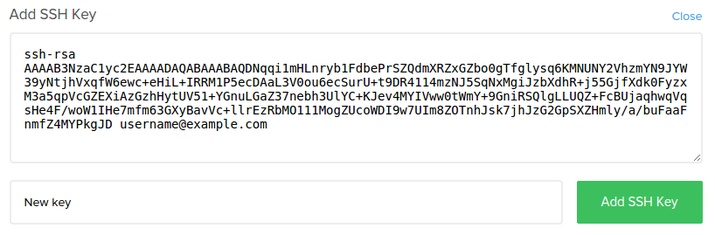
You learned how to create and generate ssh keys using the ssh-keygen command.
Unix User Generate Public Key In Linux
- Howto Linux / UNIX setup SSH with DSA public key authentication (password less login)
- sshpass: Login To SSH Server / Provide SSH Password Using A Shell Script
- keychain: Set Up Secure Passwordless SSH Access For Backup Scripts
- Openssh man pages here
- Man pages – ssh-keygen(1)
ADVERTISEMENTS